Onshore: since 1982
Staatsolie has been producing oil in Saramacca since 25 November 1982. In 2025 that came to 6.35 million barrels, an average of about 17,400 barrels per day.
Energy in Suriname
From the first barrel in Saramacca to GranMorgu at sea: how the sector works, what is coming and how to take part as a company or job seeker.
Suriname has been producing oil onshore for over forty years. A new chapter is now starting at sea.
Staatsolie has been producing oil in Saramacca since 25 November 1982. In 2025 that came to 6.35 million barrels, an average of about 17,400 barrels per day.
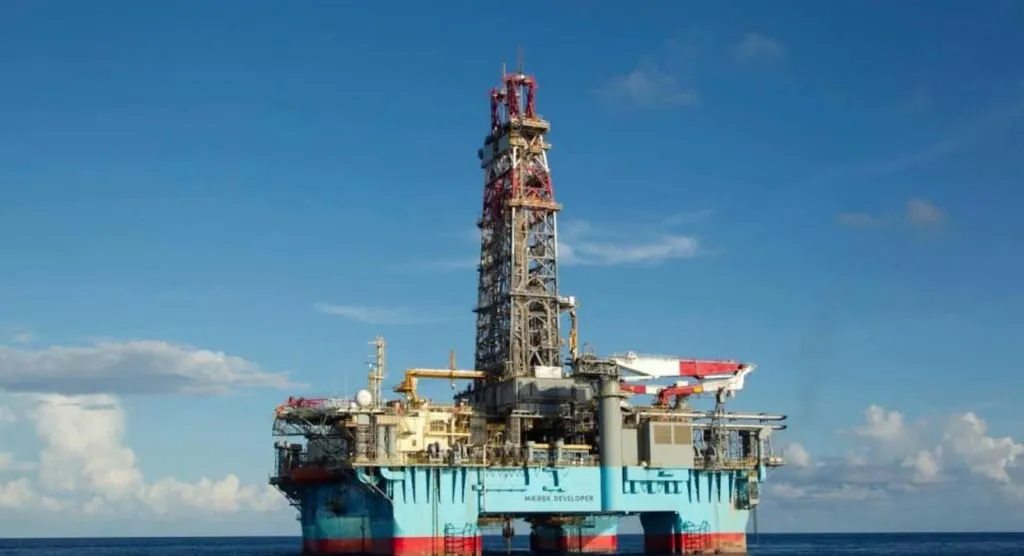
Suriname shares an oil-rich basin with Guyana. Several discoveries have been made at sea since 2020. GranMorgu in Block 58 will be the first oil project at sea, with first oil expected in 2028.
The Ministry of Oil, Gas and Environment is responsible for policy. Staatsolie is the state company; its subsidiary Staatsolie Hydrocarbon Institute manages the contracts with oil companies on behalf of the government.
While drilling for water in a schoolyard in Calcutta (Saramacca), oil is struck at a depth of 160 metres.
On 13 December, the Republic of Suriname founds its own oil company.
Commercial production starts in the Tambaredjo field at 200 barrels per day.
The refinery in Tout Lui Faut starts operating. The expanded refinery opens on 13 December 2014.
Three major discoveries in Block 58 and one in Block 52.
TotalEnergies and APA Corporation take the final investment decision for Block 58.
According to the schedule, GranMorgu then starts production.
The oil company of the Republic of Suriname, its sole shareholder.
Revenue and profit include the subsidiaries SPCS and GOw2. The shareholders approved the figures on 15 May 2026.
Block 58, with TotalEnergies as operator and Staatsolie as partner.
After GranMorgu, the sector is looking mainly at gas in Block 52 and at new acreage.
Petronas is operator with 80%; Staatsolie holds 20% through Paradise Oil Company. Discoveries include Sloanea (gas), Roystonea and Caiman. Petronas reports eight successful wells in Suriname, together holding more than one billion barrels of oil equivalent.
In February 2026 Minister Brunings called the drilling results in Block 52 promising and expected an investment decision on gas in late 2026 or early 2027. That decision has not yet been taken.
Since 24 November 2025 Staatsolie has been offering over 70,000 km² at sea for two years, divided into five sectors. Staatsolie has already reported proposals in several sectors.
According to Petronas, it participates in eight offshore blocks in Suriname: 9, 10, 48, 52, 53, 63, 64 and 66.
Ten parties in Suriname’s oil, gas and energy sector, with their contact details.

Staatsolie Maatschappij Suriname N.V. is the national oil and energy company of Suriname, founded on 13 December 1980. The company plays an important role in developing Suriname’s energy sector and is engaged in the exploration, production and refining of crude oil, the distribution of oil products and the generation of electricity.
Staatsolie also supports the development of the offshore oil and gas sector and works with international partners to make use of Suriname’s energy resources.

TotalEnergies EP Suriname B.V. is the Surinamese exploration and production company of the international energy group TotalEnergies. The company plays an important role in developing Suriname’s offshore oil and gas sector, with particular attention to oil resources off the country’s coast.
One of its main projects is GranMorgu, in offshore Block 58. This large-scale deepwater oil project is carried out by TotalEnergies, together with APA Corporation and Staatsolie. It aims to develop the offshore oil resources and is an important step in the further development of Suriname’s energy sector. Production is scheduled to start in 2028.
Through its activities, TotalEnergies contributes to local knowledge, skills and business opportunities for Surinamese companies that supply services and products to the energy sector. Together with partners, the company also invests in social projects and the development of local communities.

PETRONAS Suriname Exploration & Production B.V. is the Surinamese subsidiary of the international energy group PETRONAS. The company explores and develops oil and gas resources off the coast of Suriname.
PETRONAS plays an important role in developing Suriname’s offshore energy sector and is involved in finding and developing potential oil and gas reserves. Its activities contribute to the growth of the energy sector and offer opportunities for local companies, suppliers, technical service providers and professionals.
For entrepreneurs, investors, job seekers and others, PETRONAS is an interesting party to follow in Suriname’s growing oil and gas industry.

Chevron Suriname Exploration Limited is the Surinamese subsidiary of the international energy group Chevron. The company focuses on oil and gas exploration in the offshore area of Suriname. Chevron is involved in several offshore exploration blocks and works with international energy companies and local partners to investigate Suriname’s oil and gas potential.
Chevron’s activities are relevant to the development of Suriname’s energy sector and offer starting points for local entrepreneurs exploring the offshore industry, including possible opportunities as suppliers of goods and services.

SLB is an international energy and technology company that provides innovative solutions and specialised services to the oil and gas industry. It supports energy projects with advanced technology, digital solutions and technical expertise to make oil and gas operations more efficient and safer.
With a presence in Suriname of more than 60 years, SLB plays an important role in developing the local energy sector. In February 2025 the company opened a new office in Paramaribo to strengthen its local presence, cooperation with partners and development of Surinamese talent.
SLB focuses on, among other things, technological support for oil and gas production, subsurface analysis, digital applications and solutions for offshore energy projects. It works on innovations that can contribute to the further growth of Suriname’s energy sector.

CEAD N.V. is a Surinamese group of companies specialising in engineering, construction, staffing and industrial solutions for sectors including oil and gas, mining, energy, water and petrochemicals. With more than 30 years of experience, CEAD supports companies with technical projects, from design and preparation to construction and execution.
The group includes CEAD Engineering N.V., CEAD Construction N.V. and CEAD Manpower N.V. Its services cover technical design, mechanical and electrical work, piping, tank construction and maintenance, industrial construction and the recruitment and deployment of qualified personnel. CEAD also supplies industrial products, including pipes, fittings and process-related materials.
CEAD N.V. focuses on quality, safety, craftsmanship and reliable project delivery. The company lists certifications to ISO 9001:2015 for quality management and ISO 45001:2018 for occupational health and safety. CEAD thus positions itself as a professional partner for companies seeking technical expertise and support for industrial projects in Suriname.

Oilfield Tubular Services (OTS) is a specialised service provider in Suriname’s oil and gas sector, focused on inspecting, maintaining and repairing the pipes and connections used in drilling and oil production. It supports drilling companies, oilfield operators and other industrial service providers with technical solutions that contribute to the safety, reliability and efficiency of their work.
OTS offers services including non-destructive testing (NDT), precision machining with CNC machines, thread repair, making up and breaking out pipe connections, and the storage and quality control of tubular goods. These services help clients keep material in good condition, limit unnecessary replacement costs and reduce operational delays.
By combining local service with international technical standards, OTS aims to support Suriname’s growing offshore oil and gas industry. This makes it an interesting business partner for companies active in drilling, technical maintenance and industrial services.

EXSOL Industrial N.V. is a technical services company in Suriname that supports organisations with professional solutions for industrial installations, equipment and projects. It focuses on sectors including oil and gas, mining, energy and petrochemicals.
Its services include inspection and testing, specialist mechanical services, project management, hydroblasting and industrial cleaning. EXSOL also supplies technical products and offers training and certification services.
With attention to safety, quality and the reliability of industrial installations, EXSOL helps companies work efficiently and limit equipment downtime.

The Suriname Energy Chamber (SEC) is an organisation dedicated to the development and growth of the energy sector in Suriname. It is a platform where companies, entrepreneurs, government bodies, investors and international partners can connect to share knowledge, encourage cooperation and discover business opportunities.
The SEC focuses on, among other things, developments in the oil and gas industry, sustainable energy, the energy transition and strengthening local companies. It also supports knowledge sharing, business networks and initiatives that contribute to the further development of Suriname’s energy sector.

CARICHAM is a regional network of Chambers of Commerce in the Caribbean dedicated to economic growth, international trade and business cooperation. It connects entrepreneurs and business organisations from different Caribbean countries to share knowledge, build new business relationships and promote trade opportunities.
For companies in the energy, oil and gas sector, regional cooperation offers opportunities to make contacts, exchange knowledge and explore new markets. CARICHAM also focuses on trade promotion, advocacy and strengthening the regional private sector. Suriname is part of this network through the Suriname Chamber of Commerce & Industry (KKF).
Contact person: Gino Naarden, vice president and contact person for Suriname.
Money, jobs, rules and the environment: what is settled and what is not yet.
The Suriname Savings and Stabilisation Fund Act (Wet Spaar- en Stabilisatiefonds Suriname, S.B. 2024 no. 179) sets out how the state puts aside part of its oil revenue, to make Suriname less vulnerable to swings in that income.
In October 2026 the government discussed a draft vision: using oil and gas money for education, innovation and other sectors, so the economy depends less on natural resources. The vision is not yet final.
TotalEnergies estimates that GranMorgu will create more than 6,000 direct, indirect and induced jobs and US$ 1 to 1.5 billion in local contracts. These are the company’s own estimates.
The Petroleum Act 1990 calls for priority for Surinamese people and local goods and services, but sets no percentages. The Local Content Board has prepared a separate act; as far as is known it has not yet been passed.
TotalEnergies promises an all-electric production vessel, no routine flaring and reinjection of gas. These are the company’s own plans.
Register your company, look for work and find training here.
The latest articles on SurinaamseGids.
Short answers to what people most often want to know.
According to TotalEnergies and Staatsolie in 2028, from the GranMorgu project in Block 58. Suriname has been producing onshore since 1982.
In 2025 Staatsolie produced 6.35 million barrels onshore, an average of about 17,400 barrels per day. GranMorgu is designed for 220,000 barrels per day.
TotalEnergies (40%, operator), APA Corporation (40%) and Staatsolie (20%).
The oil company bears the cost and risk of exploration. If production follows, the proceeds are shared with the Surinamese side according to the contract.
Register your company through SAP Ariba to supply Staatsolie, or through the Supplier Registration Portal for the offshore companies. That portal also sends updates about tenders.
Look at the jobs at Staatsolie and in our own job listings, or see the training at NATIN. Work at sea usually requires safety training such as T-BOSIET; that certificate is renewed every four years.
The Suriname Savings and Stabilisation Fund Act contains rules for saving part of the revenue. The government is also working on a vision for spending up to 2050, which is not yet final.
These organisations always have the latest information.
Please note: this is not an official website of Staatsolie or the government. SurinaamseGids.com summarises public information. Plans and figures can change: always check important matters at the source.
Last updated on 7 November 2026. Sources: Staatsolie, Staatsolie 2025 results, Staatsolie on GranMorgu, TotalEnergies, Rigzone, Suriname Herald, GFC Nieuws, La Caribeña News, S.B. 2024 no. 179.